FRP Tanks About
1. What is an FRP tank?: An FRP (Fiber Reinforced Plastic) tank is a type of composite material tank used for storing liquids and chemicals.
2. What are FRP tanks used for?: FRP tanks are commonly used for storing water, chemicals, and other liquids in various industries, including water treatment, chemical processing, and agriculture.
Benefits and Features
1. What are the benefits of FRP tanks?: FRP tanks offer several benefits, including corrosion resistance, durability, and low maintenance.
2. Are FRP tanks resistant to corrosion?: Yes, FRP tanks are resistant to corrosion, making them suitable for storing chemicals and other corrosive substances.
Design and Customization
1. Can FRP tanks be customized?: Yes, FRP tanks can be customized to meet specific design and size requirements.
2. What sizes are available for FRP tanks?: FRP tanks are available in various sizes, ranging from small to large capacities.
Applications and Industries
1. What industries use FRP tanks?: FRP tanks are used in various industries, including water treatment, chemical processing, agriculture, and oil and gas.
2. Are FRP tanks suitable for storing drinking water?: Yes, FRP tanks can be used for storing drinking water, as they are non-toxic and resistant to corrosion.
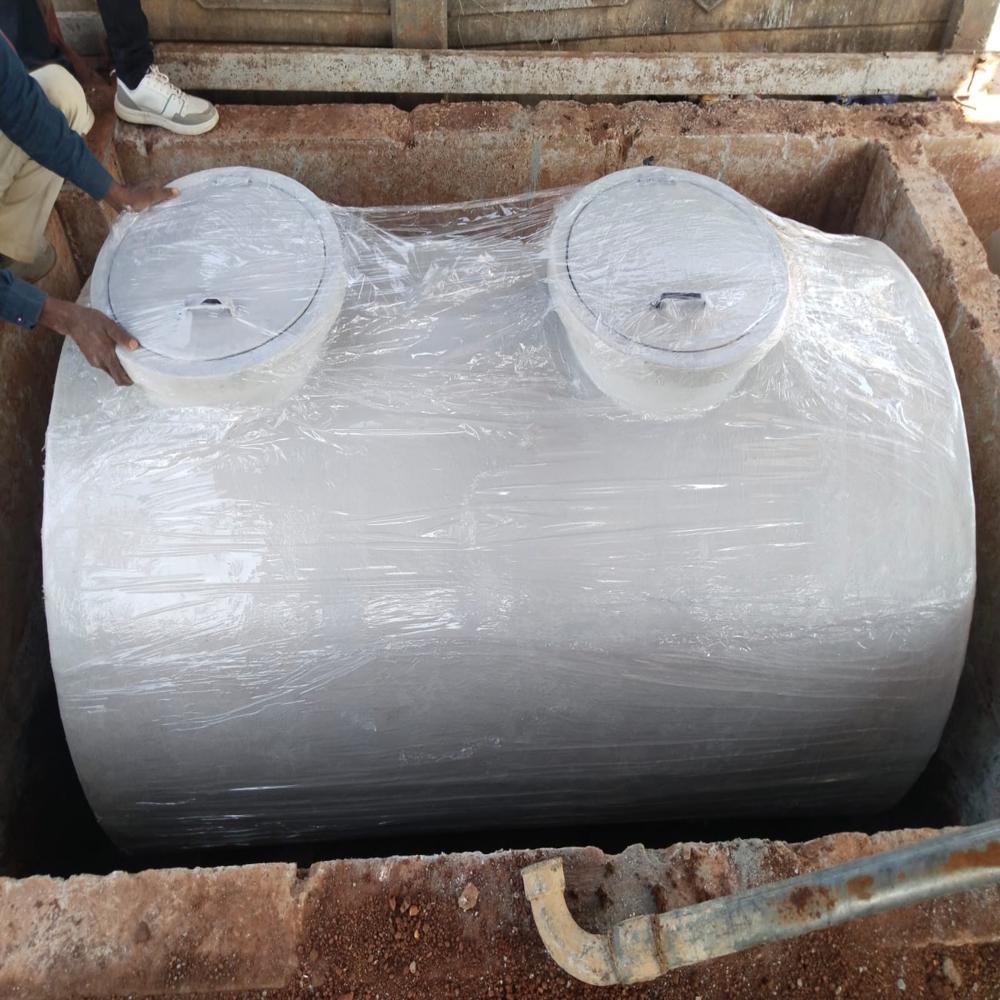
Versatile Applications and Reliable DurabilityFRP tanks excel in demanding environments, offering excellent chemical and corrosion resistance. Their smooth surface supports hygienic operations, making them ideal for water, chemical, food, and pharmaceutical industries. Custom sizes, high UV resistance, and leakproof designs deliver operational reliability whether tanks are installed above or below ground.
Customized Solutions for Industrial NeedsEvery FRP tank is engineered for client-specific requirements, including tailored operating pressure and lid options. Bolted or sealed lids, depending on application, ensure secure containment. Our tanks can be manufactured in any dimension to fit diverse processes, guaranteeing optimal performance and safety for your installation.
FAQs of FRP Tanks:
Q: How are FRP tanks installed for water or chemical processing applications?
A: FRP tanks can be installed either above ground or underground, based on project requirements. Our team ensures proper placement, connection, and sealing, whether its for water treatment, chemical industries, food processing, pharmaceuticals, or effluent treatment.
Q: What is the process for customizing the operating pressure and size of an FRP tank?
A: Clients can specify their required operating pressure and dimensions. Our technical experts then design and manufacture the FRP tank according to these specifications, ensuring it meets all safety and regulatory standards for its intended use.
Q: When should bolted or sealed lids be chosen for FRP tanks?
A: The choice between bolted and sealed lids depends on factors like access requirements, safety considerations, and material containment. Bolted lids provide easier access for inspection and maintenance, while sealed lids offer superior leakproof protection for sensitive or hazardous contents.
Q: Where can these FRP tanks be used within industrial facilities?
A: FRP tanks are suitable for diverse facilities including water treatment plants, chemical factories, food processing units, pharmaceutical sites, and effluent treatment stations across India. Installation can be tailored as needed, whether on the surface or underground.
Q: What are the maintenance procedures for FRP tanks?
A: FRP tanks are designed for low maintenance. Routine procedures involve visual inspections for external damage, checking lids and connections, and occasional cleaning. Their smooth and corrosion-resistant surface reduces the frequency of required maintenance compared to conventional tanks.
Q: How do FRP tanks benefit industries when used for storage and processing?
A: Industries gain significant benefits from FRP tanks such as enhanced corrosion resistance, leakproof operation, customizable capacity and pressure, UV protection, and versatile installation options. These features ensure long-term reliability, safety, and cost-effectiveness in industrial operations.





 Send Inquiry
 Send Inquiry
 Send SMS
 Call Me Free